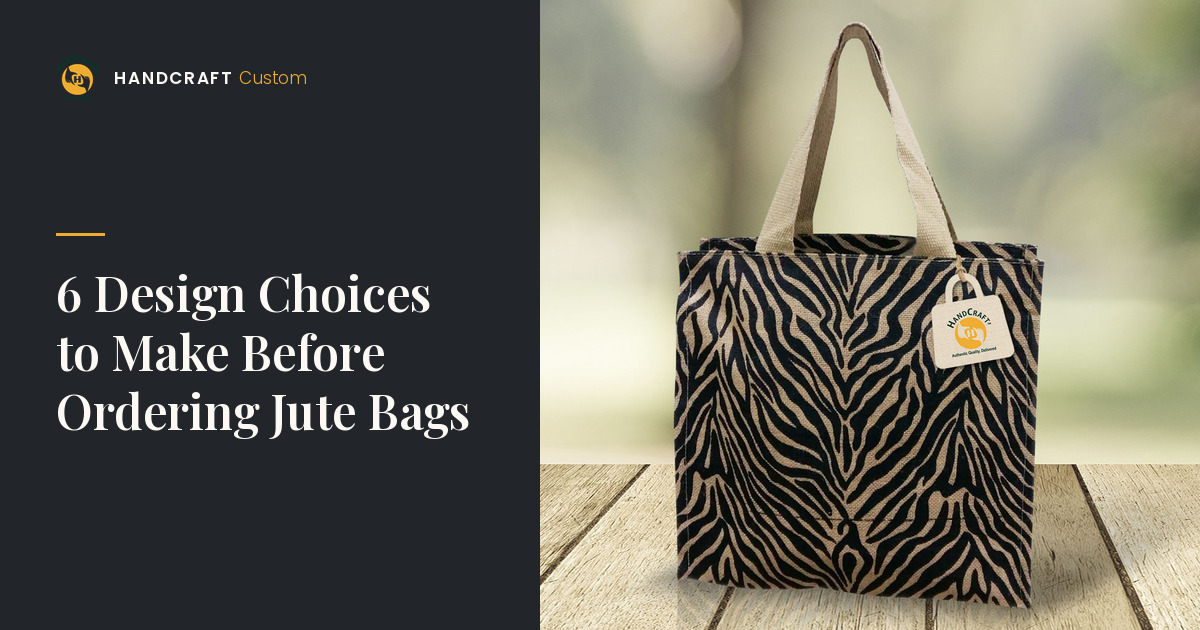
6 Design Choices to Make Before Ordering Jute Bags
Jute bags stay relevant to a programme when they are designed to be used. Six design choices, made before you request a quotation, largely decide whether recipients carry the bag again or leave it in a drawer. Each choice also affects cost and lead time, so settling them early gives procurement a cleaner brief and marketing a better result.
This article focuses on physical design decisions. Artwork detail is covered in Designing Your Logo for a Jute Bag, and print-file preparation in Printed Jute Bags.
1. Size: design for real contents and everyday use
Start with what goes in the bag on day one: conference materials, a packaged gift, product samples. Then ask what recipients might carry afterwards. A bag sized only for a slim brochure may be too small for anything else. One sized for a hamper may be awkward on a commute. Give finished width, height and gusset depth, or describe contents so dimensions can be recommended. Custom size is part of the service, so you are not limited to catalogue sizes.
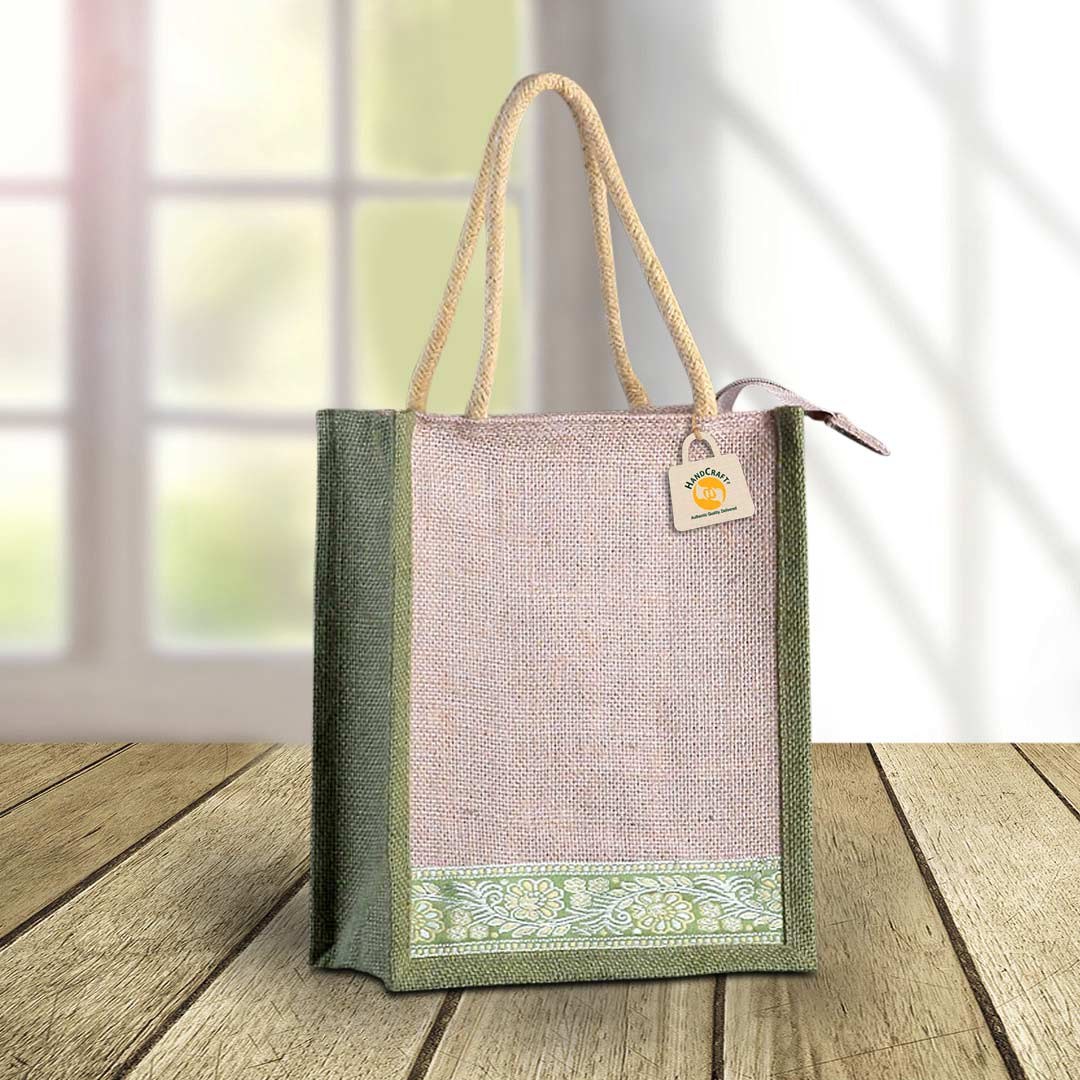
A useful test: pack your actual contents into a similar bag you already have and walk around with it. If it feels cramped or floppy, adjust before you specify.
2. Shape: flat, gusseted or box-style
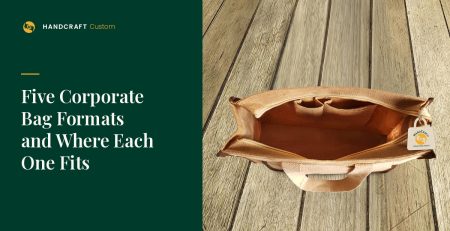
A flat tote is light and economical, suited to documents and slim contents. A gusseted bag opens wider and holds bulkier items. A box-style format, which HANDCRAFT calls the Tesco jute bag (a style name, unconnected to the retailer), stands on its base and keeps boxed contents upright. Shape affects how much fabric and stitching the bag needs, and therefore the quotation.
3. Handles: match how people will carry it
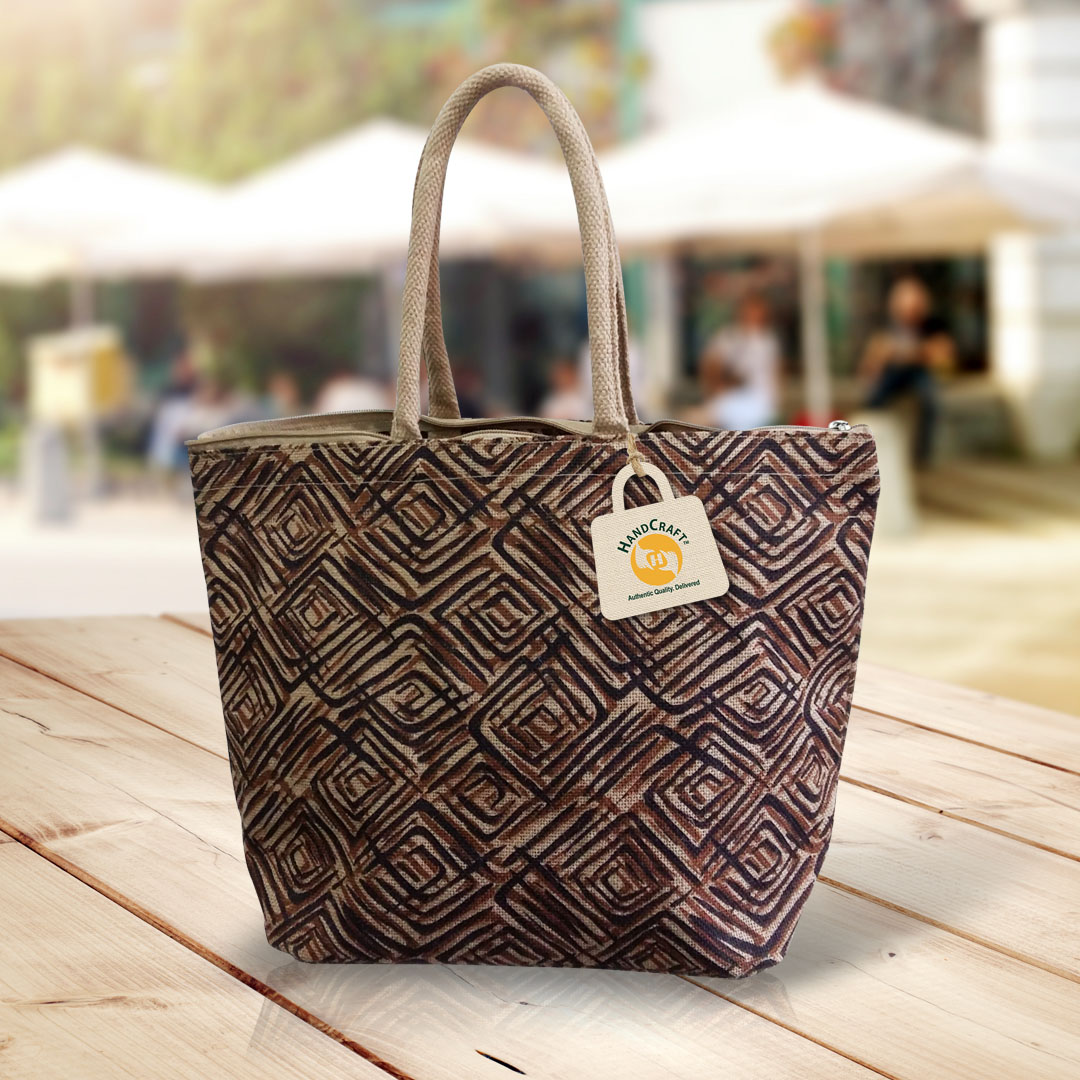
Short handles suit hand-carry at events. Longer handles let the bag go over a shoulder, which matters for commuting, campus and exhibition use. Handle construction changes comfort and look: flat webbing, padded or rope-style handles, or cane handles on some styles. Specify type and length explicitly. Do not assume a load rating from a photograph; share the intended contents so suitability can be discussed.
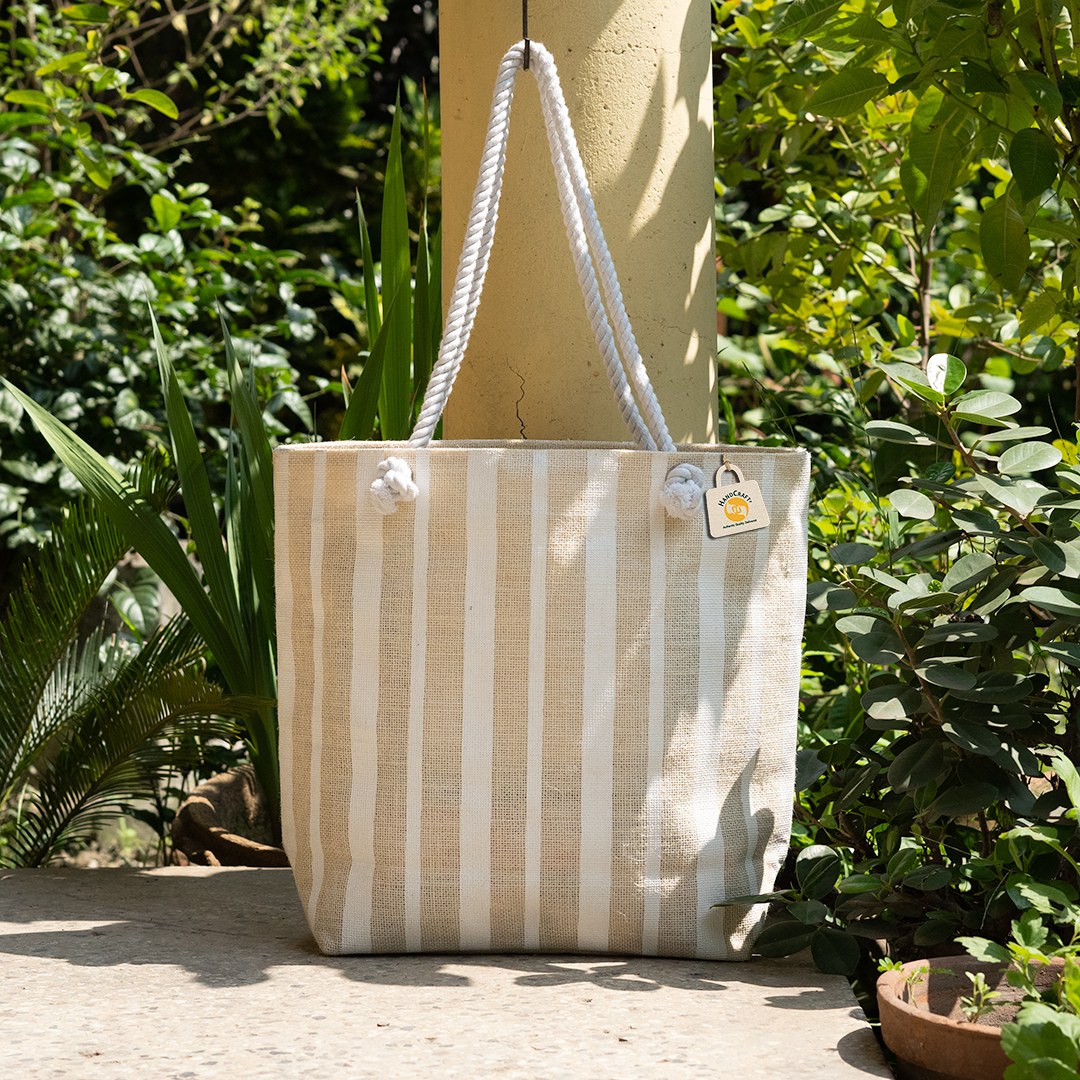
4. Colour: natural or dyed
Natural colour means undyed fabric. It keeps the authentic jute look and is HANDCRAFT’s preferred option for many corporate orders. A dyed body can match brand colours but adds two weeks and extra charges. Colour also changes how print appears, since pale inks on natural jute may lack contrast, so decide body colour and artwork colours together.
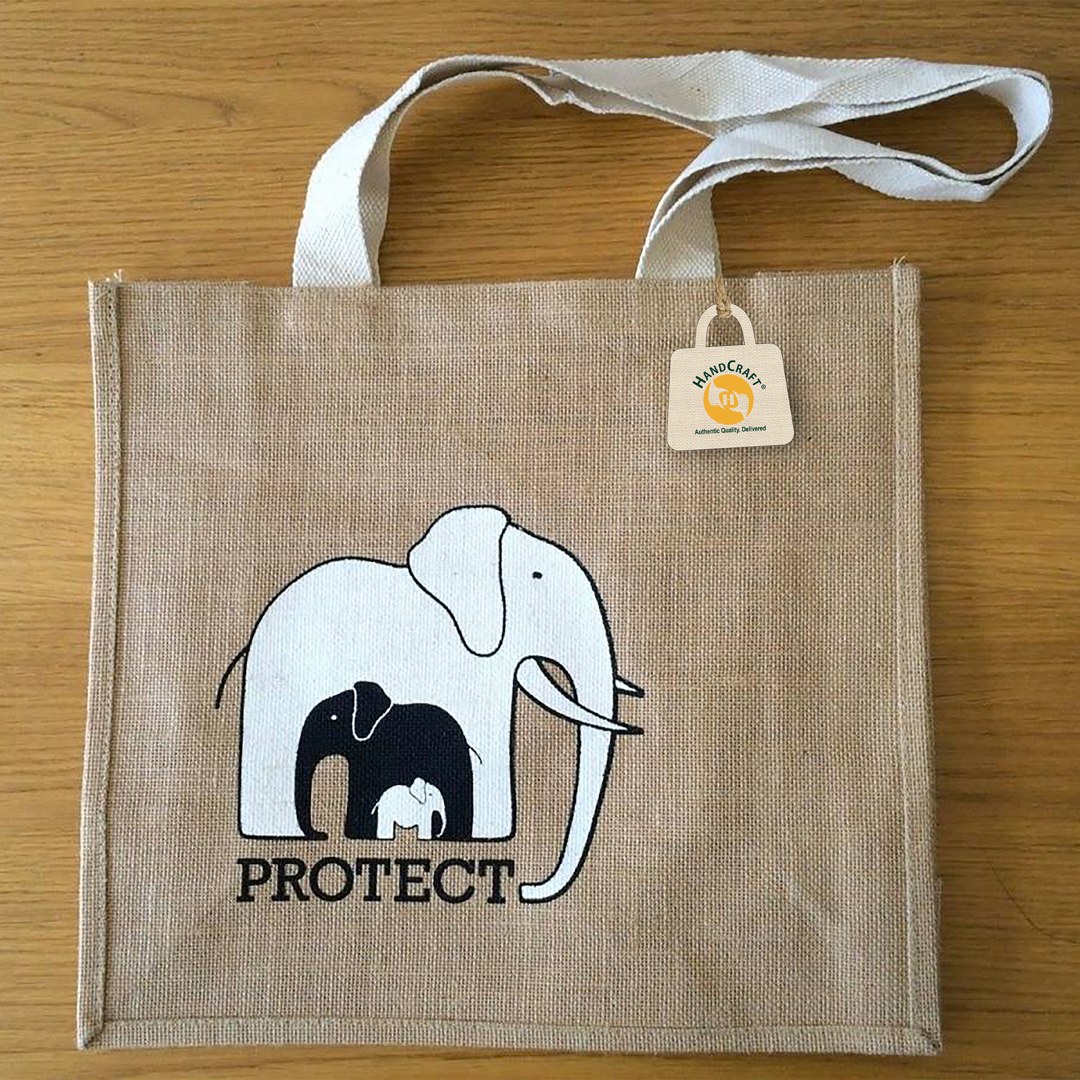
5. Artwork: permanent beats dated
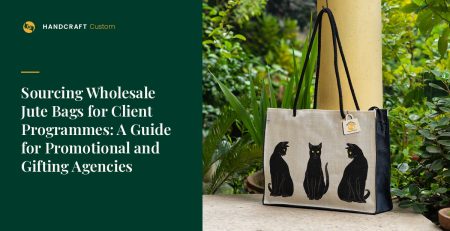
Recipients are more willing to reuse a bag with a calm, permanent brand mark than one shouting an event date or a campaign slogan. If an event name is essential, consider placing it on one side and keeping the other side clean, or carrying dated information on an insert. Keep detail bold enough for the jute weave. HANDCRAFT uses azo-free printing inks, with method confirmed per requirement.
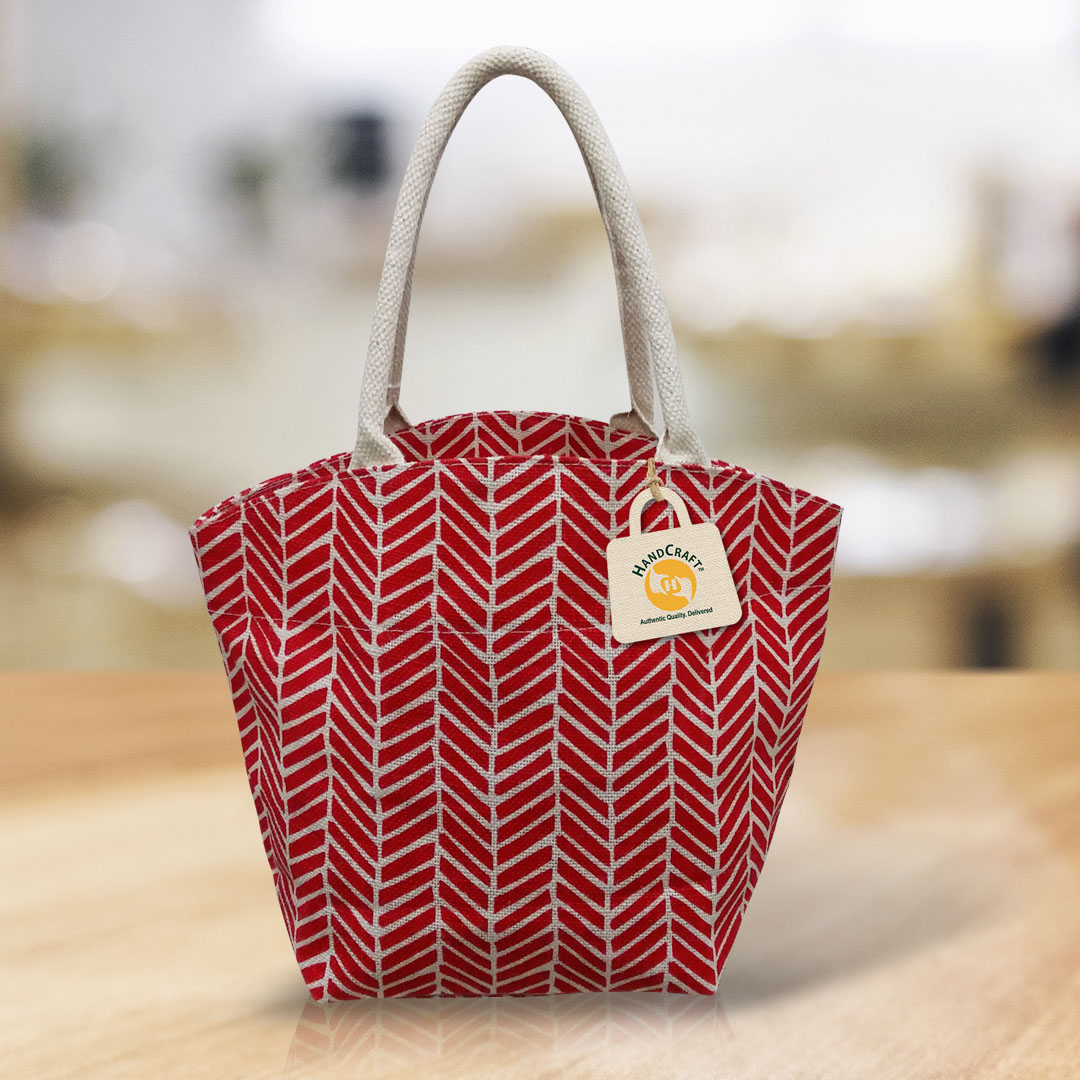
6. Finish and features: only what the programme needs
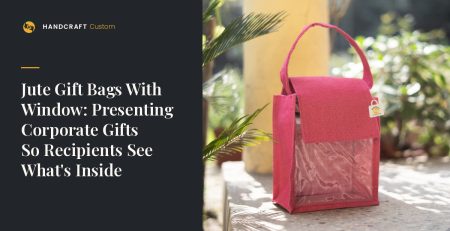
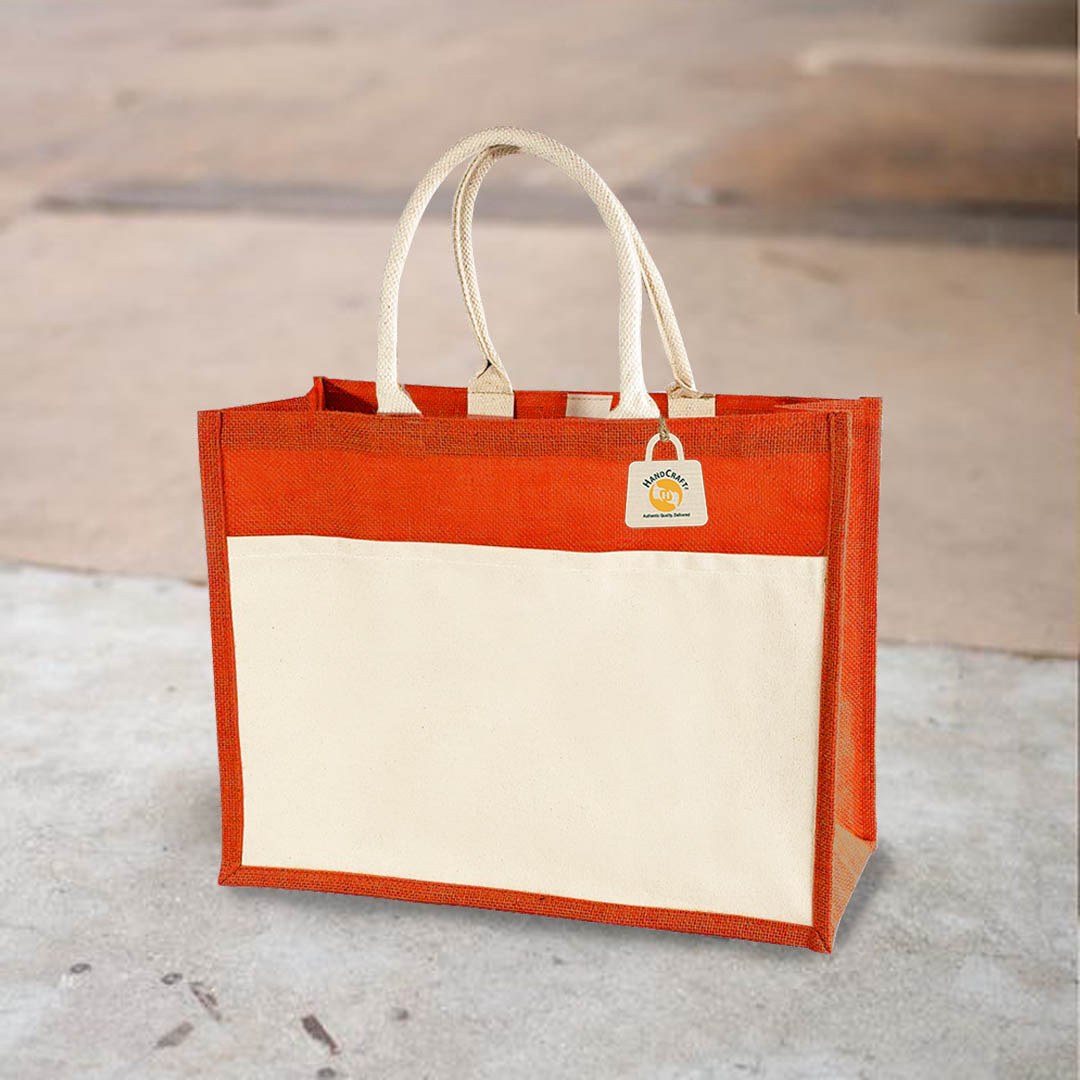
Lamination or lining, pockets, zips and windows can all add value. They also add cost, time and, for laminations and windows, plastic components that matter for environmental wording. List each feature with a reason. If a feature is essential, such as a zip for small items or a lining for a particular use, name it so it can be confirmed on the actual product.
Putting the six jute bag design choices together
Write the six decisions into one short specification: size, shape, handles, colour, artwork approach and features. That single page lets HANDCRAFT review the requirement and prepare an individual quotation, and it lets your team compare any alternative quotations on the same basis. Usual delivery guidance is 2–4 weeks, depending on quantity and printing. Sampling is decided case by case.
Design checklist
- Size set from real contents and likely reuse
- Shape chosen: flat, gusseted or box-style
- Handle type and length specified
- Natural or dyed body decided, with print contrast checked
- Permanent artwork approach agreed
- Each extra feature justified
Questions buyers ask
Does dyed colour change the schedule?
Yes. Dyeing adds two weeks and extra charges; natural colour is undyed fabric.
Where is logo design covered?
See logo design for jute bags.
Made your six choices? Send them with the quantity and arrival date via the Bulk Enquiry route for an individual quotation.