Plastic Reduction Claims for a Bag Programme: What Evidence You Need
When an organisation changes the bags used at events, offices or programme distribution points, its communication should distinguish the change from its measured results. Records may show which carriers were purchased and issued. Claims about waste reduction or environmental impact need evidence that matches the programme, period and comparison. This guide sets out what to record before publishing those claims.
Describing the change versus claiming the result
There are two quite different statements:
- The change: “Our stores now offer jute bags instead of single-use plastic carriers.” This is a factual description of what you did, and you can easily verify it.
- The result: “We have cut plastic waste by 40%” or “Our bags save 1 million plastic bags a year.” This is a claim about outcomes, and it needs data.
Describing the change is usually straightforward. Claiming results needs evidence that most programmes do not routinely collect.
Why results are hard to prove
To assess a claimed environmental improvement, define what is being compared and what evidence is available: the materials and components, quantities purchased, use of the bags and disposal arrangements. Procurement records can establish a change in purchasing. They do not, on their own, establish the environmental impact of the whole programme. Avoid a numerical or comparative impact claim without an assessment that supports it.
Evidence for common claims
“We have stopped using plastic carriers at our participating sites.”
Evidence: procurement records showing plastic carriers are no longer bought, and a documented site policy. This is a statement you can usually support.
“We have reduced plastic bag use by X%.”
Evidence: purchase or issue records for plastic carriers before and after the change, for the same scope and period. State the scope, such as which sites and over what period.
“Each bag replaces X plastic bags.”
Evidence: actual reuse data, from surveys or tracking, for your recipients. Generic figures from elsewhere rarely apply directly. Avoid this claim unless you have measured it.
“Our bags are plastic-free.”
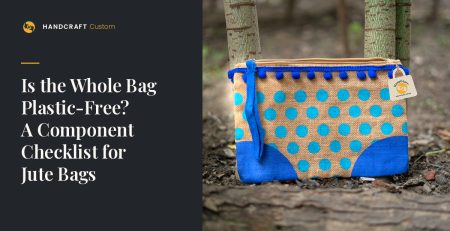
Evidence: a confirmed specification covering every component, including lamination, windows, zips, threads and trims. See Is the Whole Bag Plastic-Free?
“Our bags are biodegradable.”
Evidence: specific to the materials and conditions. Natural jute fibre is plant-based, but finished bags with synthetic components may not break down in the way the claim implies. State conditions accurately, or avoid the claim.
Wording that stays accurate
- “We now use jute bags at our events instead of single-use plastic carriers.”
- “Made from jute, a natural plant fibre. Please reuse it.”
- “In 2026 we stopped buying plastic carriers for our participating sites.” (if true and recorded)
- “Printed with azo-free inks.” (confirmed for HANDCRAFT printing)
Wording to avoid
- Health claims, such as statements that plastic bags cause disease, or that jute bags make users healthier.
- Absolute claims, such as “zero impact” or “100% eco-friendly”.
- Unmeasured savings figures.
- Emotive language that presents a single product as solving a global problem.
Build reuse into the programme
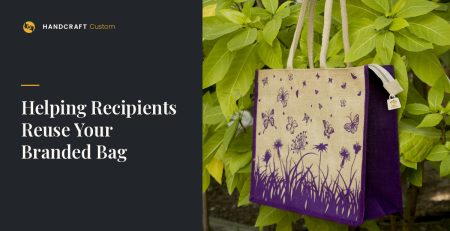
Since the benefit depends on reuse, the most useful thing you can do is make reuse likely: choose an everyday size, branding people will carry and care guidance. See Helping Recipients Reuse Your Branded Bag. If you want to report results later, plan simple measurement from the start: record plastic carrier purchases before the change, and run a short reuse survey after some months.
What HANDCRAFT can confirm
HANDCRAFT can confirm facts about the bags it supplies: fabric, construction, components and azo-free inks. Claims about your programme’s outcomes remain your organisation’s responsibility and should be reviewed by your communications or legal team.
Plastic reduction claims: evidence checklist
- Separate statements about the change from claims about results
- Keep procurement records for before and after
- Define scope and period for any percentage
- Measure reuse before stating savings per bag
- Confirm every component before saying “plastic-free”
- Remove health and absolute claims
- Get claims reviewed internally
Questions buyers ask
Can HANDCRAFT provide figures for our claim?
HANDCRAFT can confirm the bags supplied and their construction. Usage and reduction figures must come from your own records.
Where is the whole-bag check?
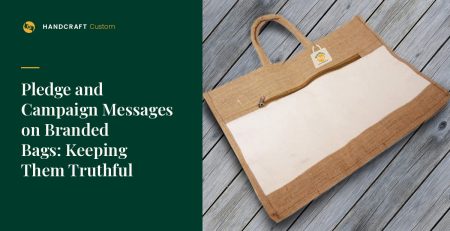
See the component checklist. For wording on the bag itself, see keeping campaign messages truthful.
Planning a switch you want to report accurately? Send the programme details through the Bulk Enquiry route and HANDCRAFT will confirm what it can document about the bags.