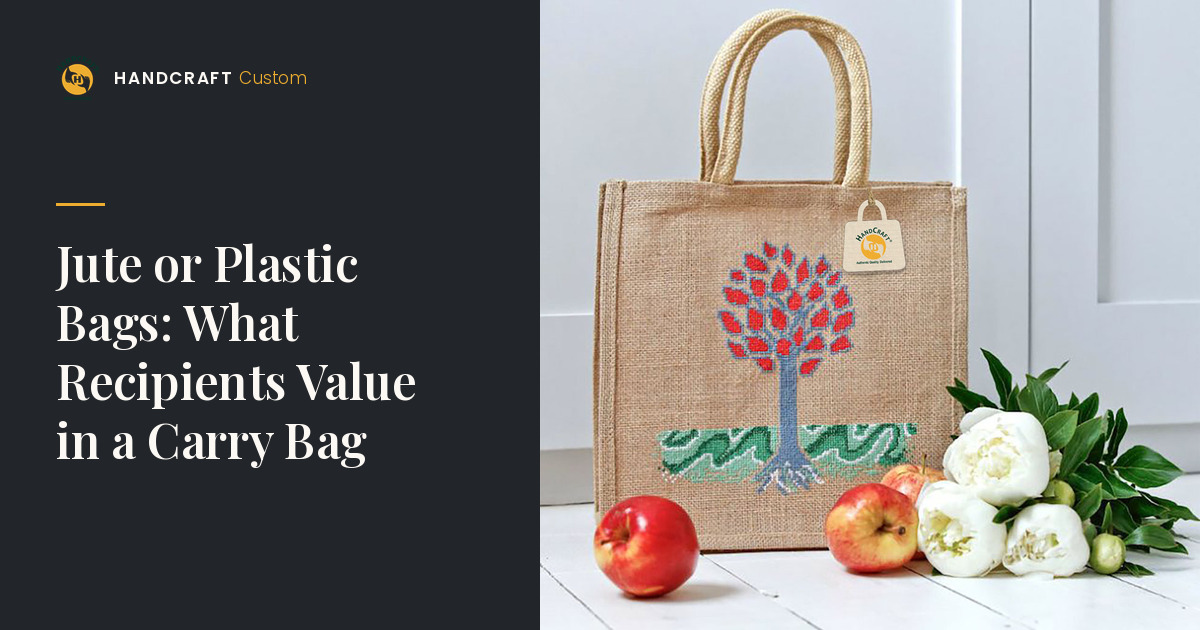
Jute or Plastic Bags: What Recipients Value in a Carry Bag
It is easy to claim that “people prefer jute bags”. It is more useful to ask what makes a recipient choose to carry one bag rather than another, and to design for that. This article looks at jute and plastic bags from the recipient’s side: handling, presentation and reuse. It makes no claim about a market-wide trend. This look at jute vs plastic bags starts from the recipient.
Practical handling
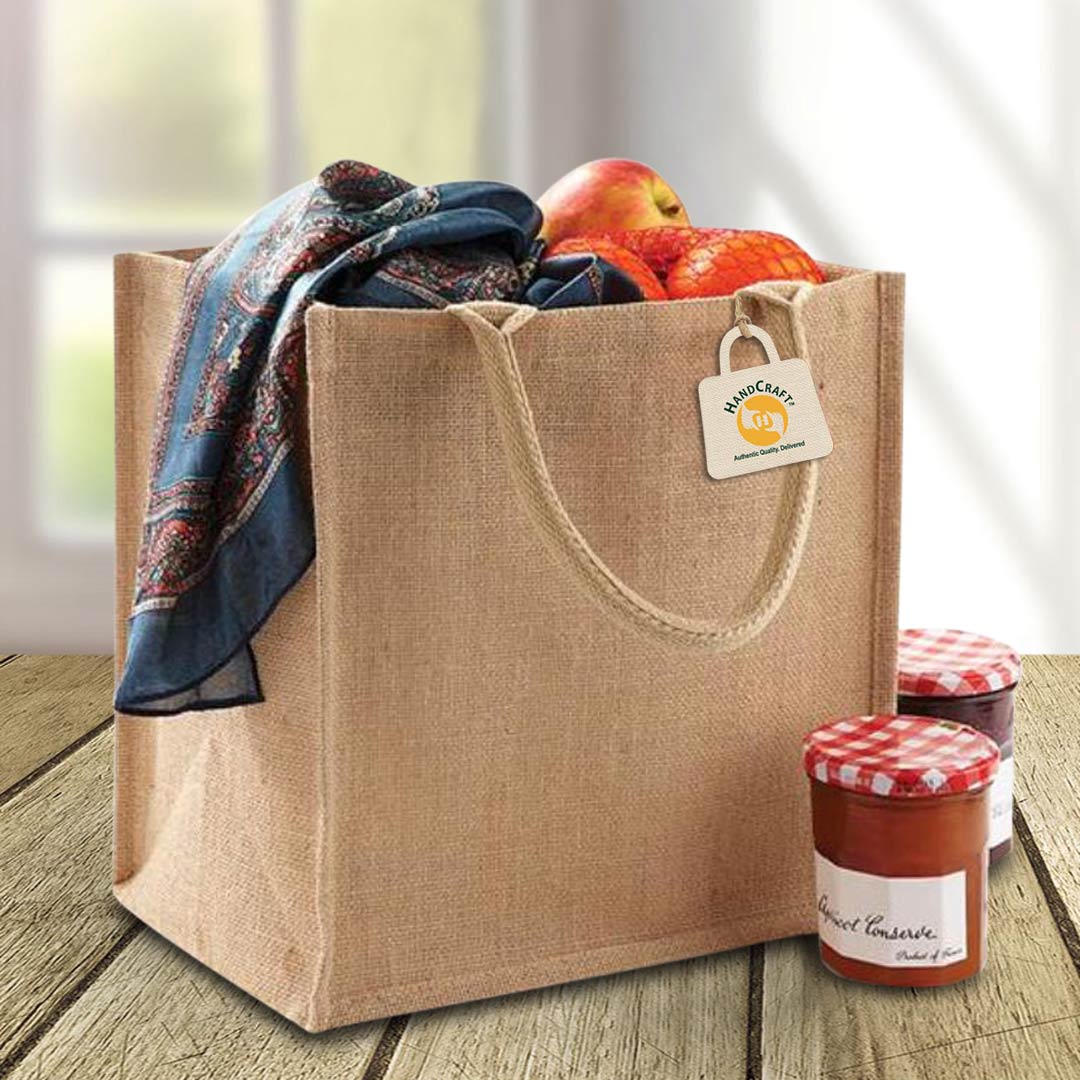
Recipients notice how a bag carries. Comfortable handles, a base that holds shape and enough room for the contents make a bag useful beyond the event. Thin single-use plastic bags are light and cheap but often stretch or tear with heavier contents. A well-specified jute bag with suitable handles and gussets can carry the intended contents more comfortably. Suitability still depends on construction and load, so share the contents with the manufacturer.
Presentation
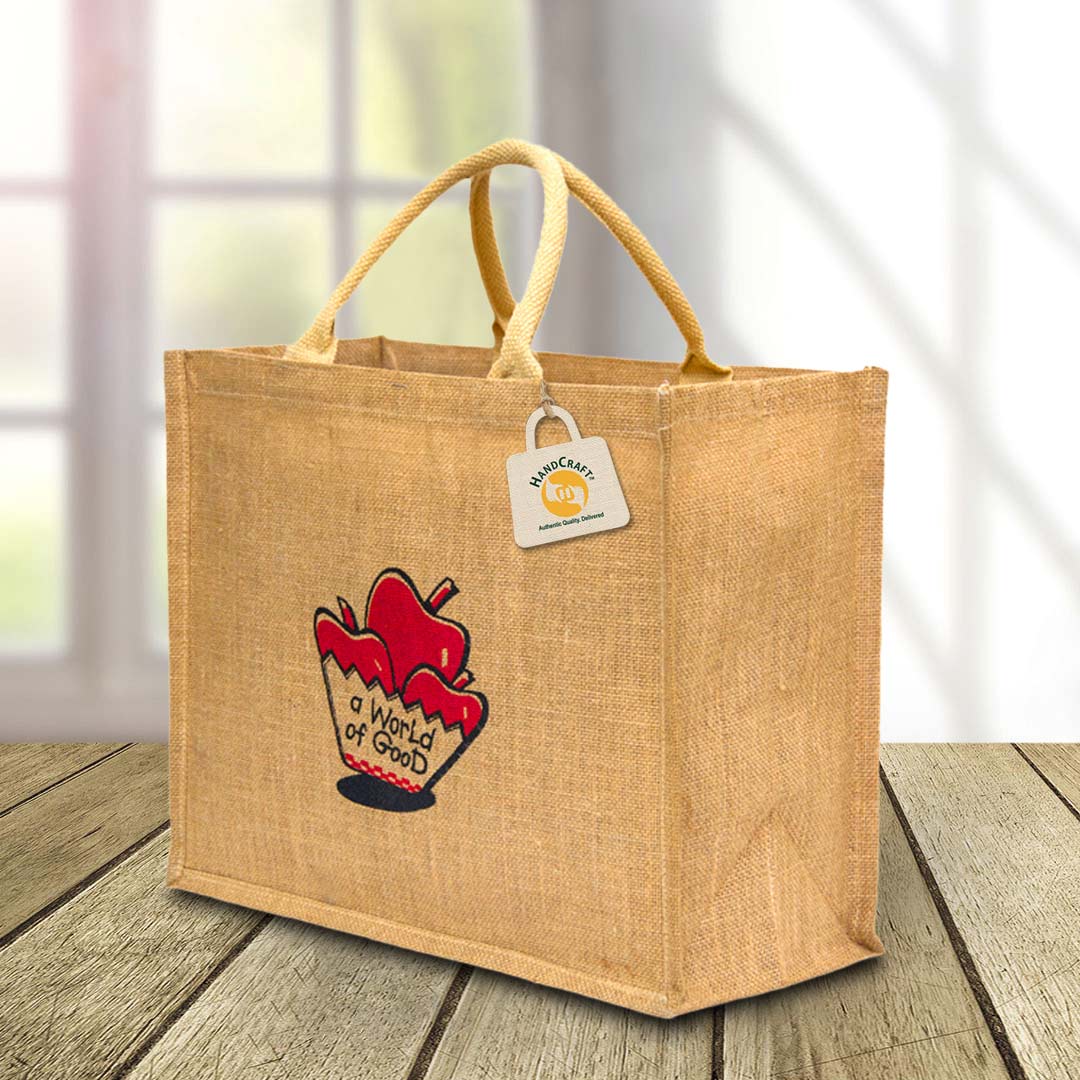
For gifts, welcome packs and client handovers, a natural-fibre bag usually reads as more considered than a plastic carrier. It frames your brand and contents differently. That matters most where the bag is part of the experience, such as gifting, hospitality or launches.
Likelihood of reuse
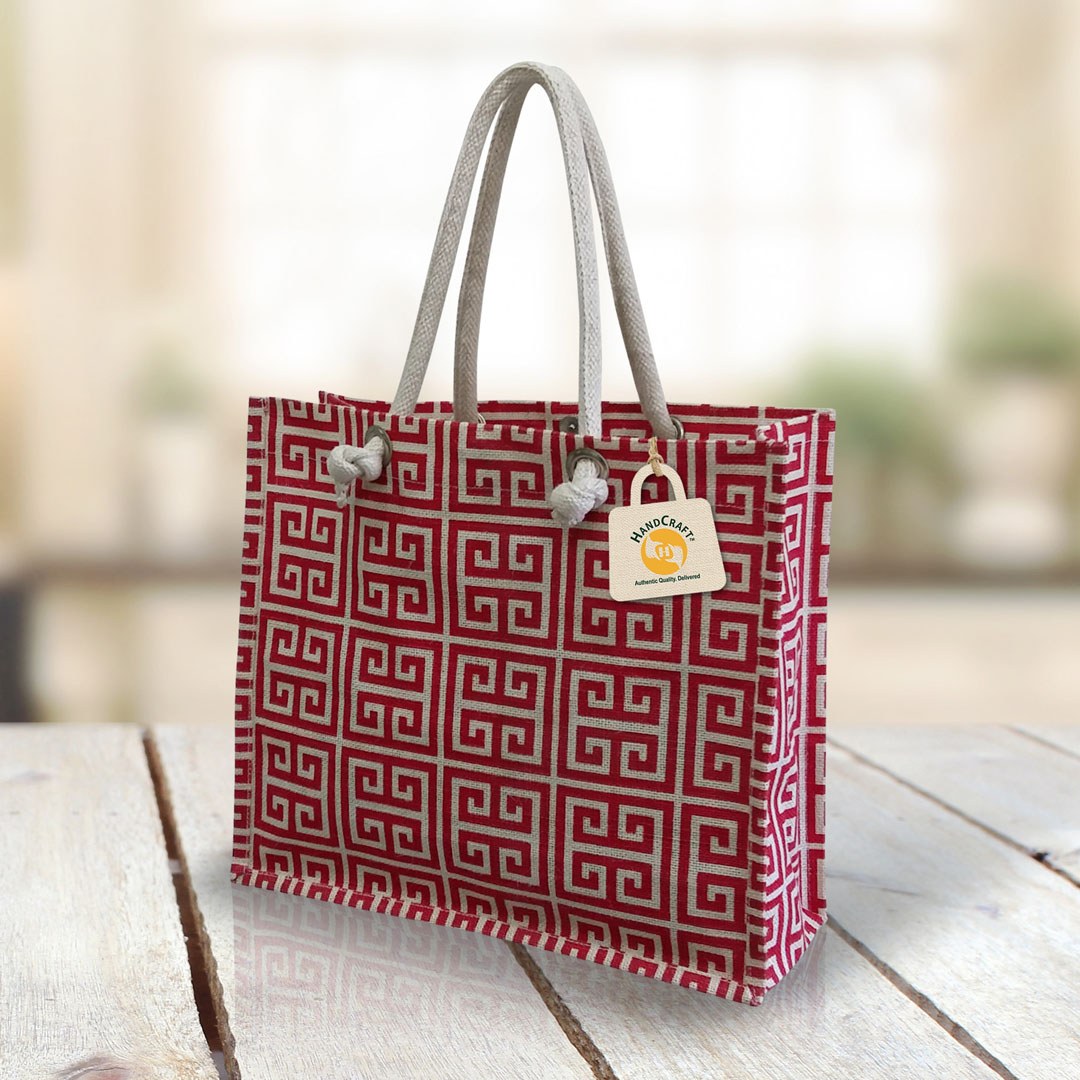
Recipients reuse bags that fit their routines: a sensible size, a design they are happy to carry, and a construction that survives use. Event-dated slogans and awkward dimensions work against reuse. See Are Branded Jute Bags Right for Your Next Marketing Campaign? for designing with reuse in mind.
Where plastic still appears
Many organisations use plastic bags for cost, water resistance or very high-volume short-life distribution. Some regions also restrict single-use plastic carrier bags; check local rules for your locations rather than assuming. A jute bag may still contain plastic components, such as a lamination or window, which matters for environmental wording. See Is a Jute Bag Really Eco-Friendly?
Jute vs plastic bags: designing for recipient preference
- Size the bag to everyday contents, not only the event pack
- Choose comfortable handles
- Keep branding calm and permanent
- Give care guidance based on the actual construction
- Avoid environmental claims you cannot support
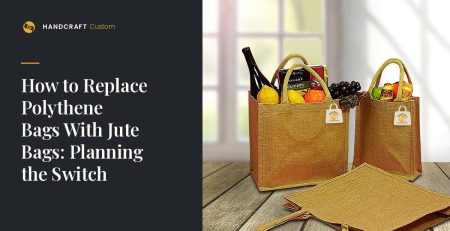
For planning a full switch from polythene, see Replacing Polythene Carry Bags With Jute.
Asking recipients directly
If your programme is large or repeated, ask a small group of recipients what they would use and what they would keep. A short survey or feedback at an event gives better guidance than general assumptions about preference. Ask what they carry, how they travel and whether they already own reusable bags.
Questions buyers ask
Are jute bags waterproof?
Natural jute is not waterproof; lining options are confirmed for each order.
How do we plan the change from plastic carriers?
See replacing polythene carry bags with jute.
Want a bag recipients will choose to carry? Describe your recipients and their typical contents through the Bulk Enquiry route, and HANDCRAFT will suggest formats and quote.